
Physical Literacy Activities
What is physical literacy?
Physical literacy refers to the development of the knowledge, skills, and attitudes a child needs to enable them to participate in a wide variety of activities throughout their life.
As younger kids begin to spend more and more time on screens, and less time physically playing and being active, developing physical literacy skills is becoming increasingly important. As children develop these skills, they will become more confident in their ability to participate in a wide variety of physical activities, sports, and games throughout their lifetime.
Learning physical literacy doesn’t need to be difficult, and it doesn’t need to be more work for the parent! Get moving with simple, fun physical activities to help your child develop their physical skills and thrive. These activities were developed by Active for Life, and designed for babies to children up to age 12.
If your child is struggling with any activity, try one from the earlier sections until they are comfortable with that skill.
Jump to your desired section by clicking the button!

Babies 0 – 1 Years Old
This activity helps your infant to develop basic upper body and lower body movements, as well as strength and coordination to lift their head. Start with your baby lying on your chest and progress to placing them on their stomach on a blanket or play mat.
This is a good activity to help your child to develop basic upper body and lower body movements, as well as visual acuity. Lay a blanket on the floor, place your baby on it, and surround them with a variety of colourful baby toys within kicking or reaching distance.
This activity helps your baby to develop basic upper body movements, visual acuity, and core strength with balance. Sit with your baby on your lap, sitting upright and facing forward like you. Point at different things that are happening (children playing, cars driving, birds singing, rain falling, etc.) and talk to your baby about what you’re seeing.
Toddlers 1 – 3 Years Old
Blow bubbles for your toddler and encourage them to try to catch the bubbles. Make sure that there are no dangerous obstacles where you’re playing, and be sure to let your toddler have a turn blowing the bubbles!
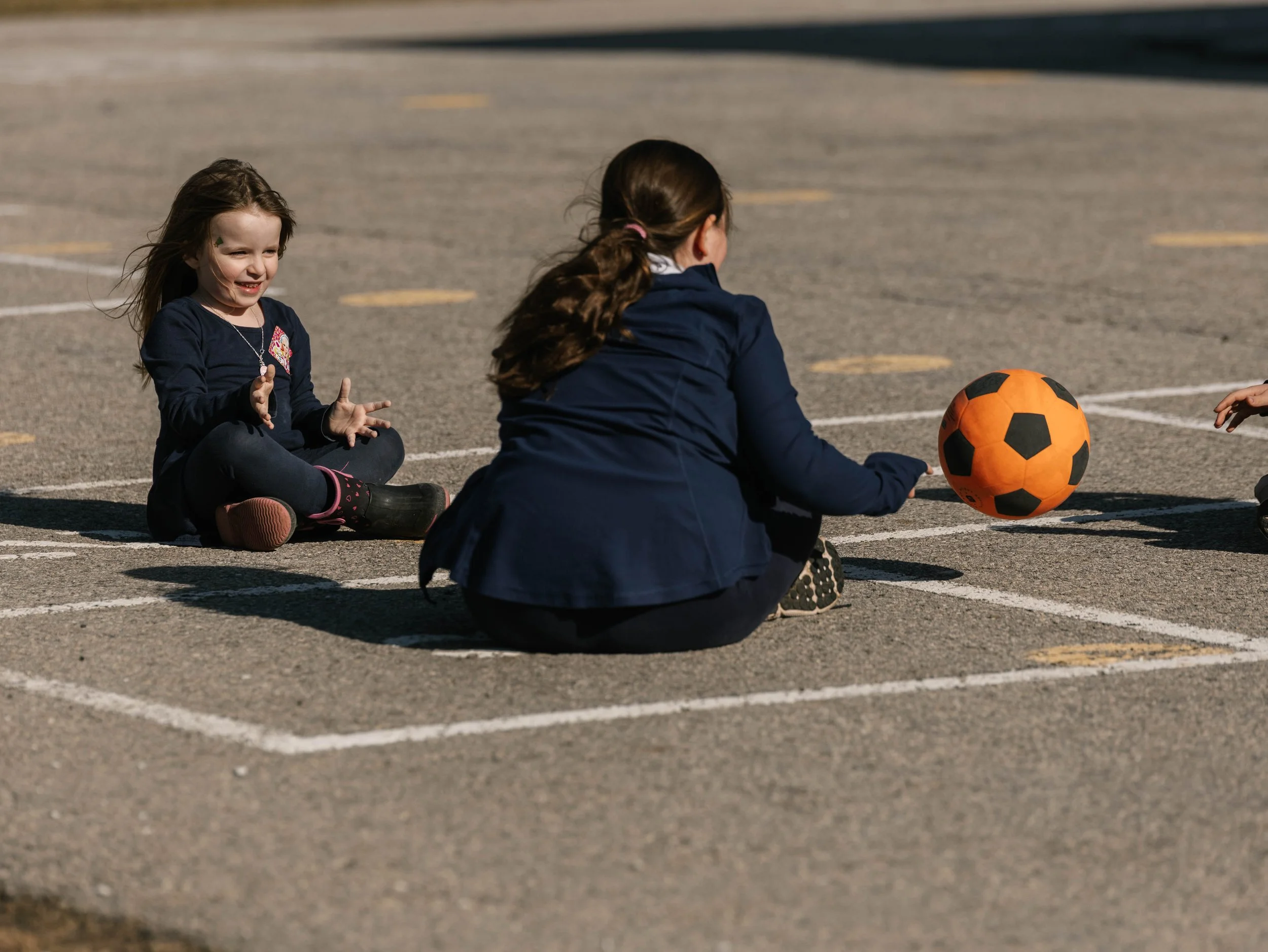
Sit on the floor opposite your child with you legs spread apart in a “V” shape (sit on your knees if kneeling is more comfortable). Have your child sit the same way facing you, then roll the ball back and forth. This game helps your toddler to develop fine motor control and hand-eye coordination.
Children love to climb! Here are some ideas to help your child to explore climbing safely. This is a great way to develop their balance and physical coordination, along with some agility, while building strength in their arms and legs.
This activity helps your toddler to develop fine motor control in the hands, as well as hand-eye coordination. Sit together reading your favourite picture books, pointing at pictures, discussing the images, and letting your child turn the pages.
Sit with your toddler and play peek-a-boo by hiding your face behind your hands. Once your toddler knows the game, encourage them to use their hands and lead the play. Progress to hiding behind furniture (indoor) or trees and shrubs (outdoor) and moving in and out of hiding while saying “Peek-a-boo!”
Show your child pictures of big cats such as tigers, lions, leopards, and cheetahs, then pretend that both of you are tigers (or lions, leopards, etc.). Add a chasing element to the game and you are helping your child to develop agility, balance, and early running.
Talk with your toddler about rabbits and bunnies. How do they move? Play “Follow the Leader” while hopping, and take turns being the leader. This activity develops basic jumping along with agility, balance, and coordination.
Children 3-5 Years Old
Simon Says
SKILLS: Balance, flexibility
EQUIPMENT: N/A
INSTRUCTIONS:
Ask your child(ren) to follow your instructions and imitate you.
Explain that you will say “Simon says…” or your name followed by “…says…”.
Explain that if you do not say your name or “Simon says…” before a command, the child(ren) should remain still.
If a child moves when you have not said your name or “Simon says…”, the child must quickly sit down and stand up. (They do this instead of being eliminated.)
Demonstrate and hold each pose so the child(ren) can watch and imitate you:
Reach up high
Stand on your tippy toes
Make a wide star (legs wide, arms wide)
Make a narrow star (legs together, arms wide)
Touch the ground
Stand on one foot, then grab and lift your other foot
Squat down like a frog
Sit up on your knees like a puppy, hands in front
Sit down with knees up, then drop your knees wide, feet together (butterfly)
Sit in butterfly position, and then try to touch your nose to your toes
Lay down in Superman pose (lay on your belly, reach arms forwards, reach legs backwards, and then lift head, arms, and legs off the ground just a little bit)
Add other poses you know, or invent new ones
TIPS FOR INSTRUCTION
Try to get the child(ren) to hold each position for at least 8-10 seconds before moving to a new posture.
Change postures after your child has achieved the posture or made a good attempt.
Tightrope Walking
SKILLS: Balance, locomotion
EQUIPMENT: Masking tape (or painter’s tape)
INSTRUCTIONS:
Use masking tape to create several “tightrope” pathways (straight or otherwise).
Try to have one “tightrope” pathway for each child.
Ask the child(ren) to travel along their pathway and back again using a specific locomotion pattern. For example:
Walk heel-to-toe (raise arms for balance)
Walk sideways without crossing over your legs (side shuffle)
Walk sideways by crossing over your legs (carioca)
Hop on one foot (use one foot one way, other foot other way)
Jump on two feet
Baby crawl on hands and knees
Bear crawl on hands and feet
Animal Walk
SKILLS: Jump, hop, skip, run, gallop
EQUIPMENT: N/A
INSTRUCTIONS:
Ask the child(ren) to spread out along one end of the room.
Can you show me how a [name of animal] moves?
Ask your child(ren) to move to the other end of the room the way that animal would move.
Animal suggestions:
Horse – gallop
Bunny – 2 foot mini jumps
Kangaroo – tuck jumps
Crab – palms and heals, belly up
Dog – hands and knees
Bear – hands and feet (no knees)
Chicken/Duck – knees bent, flap elbows
Monkey – knees bent, low arms, swaying
Frog – leap from hands and feet
Elephant – trunk swing, soft steps
Bird – flapping
Giraffe – on toes and stretching
TIPS:
Ask your child(ren) to suggest other animals.
Children can make the noise of the animals.
Use music at different tempos to cue the activity
Balloon Keep Up
SKILLS: Object Manipulation
EQUIPMENT: Inflated balloons
INSTRUCTION
With an inflated balloon, demonstrate how to keep it up by striking it lightly with your fingertips, the palms of your hands, and the backs of your hands
Give each child an inflated balloon and then ask them to keep their balloons up.
After they have played for 1-2 minutes using their hands, ask the child(ren) to explore different ways of keeping their balloons up—with elbows, with head, with shoulders.
Seated Ball Rolling
SKILLS: Object Manipulation
EQUIPMENT: Small foam balls (low bounce)
INSTRUCTION
If more than one child, place children in pairs and have them sit on the floor about 2 metres apart (or adult sits across).
Ensure each child has a foam ball.
Sit down with a ball and show the child(ren) how to explore rolling the ball on the ground around their own bodies—left to right, right to left, front and back.
Ask the child(ren) to explore rolling their own ball around themselves.
After 2 or 3 minutes, show the child(ren) how they can roll their ball along the floor to their partner.
Ask the child to spread their legs apart while seated and roll one ball back and forth with their partner.
Partners practice “catching” the ball with both hands.
TIPS
Tell children not to bounce the ball.
The ball should roll along the floor smoothly.
Underhand Ball Rolling
SKILLS: Object Manipulation
EQUIPMENT: Small foam balls (low bounce)
INSTRUCTIONS
Place an empty cardboard box or laundry basket on its side on the floor against a wall with the opening facing you.
Stand 3 metres away and underhand roll your foam ball along the floor into the box or basket.
Show your child(ren) the mechanics of rolling a ball underhand:
Look at where you are rolling your ball (target).
Slowly swing your throwing arm back “like an elephant trunk”.
Then step forward (opposite foot to throwing arm) when you swing your arm to let go of your ball.
Let go of your ball close to the ground.
Start 3 metres away, and then increase the distance to 4 and 5 metres for individual children as you see them starting to master each distance
Basket Throw Underhand
SKILLS: Throw
EQUIPMENT: Bean bags, soft foam balls, empty baskets or cardboard boxes
INSTRUCTIONS
Position large cardboard boxes or laundry baskets upright along one wall.
Ideally, you will have one box or basket per child
Make sure the baskets and boxes are at least 2m apart.
Place a marker on the floor 2m away from each basket or box (use a bean bag, a toy, masking tape, or existing floor marking).
Ask your child(ren) to throw their bean bags or balls underhand into their box or basket from behind their marker. (Show them an underhand throw.)
Have the child(ren) start at a distance of 2m, then ask them to step further back when they need more challenge.
If some children have difficulty at 2m, they are allowed to move closer until they experience success.
PROGRESSION – Play Basket Golf
Using 4-8 empty baskets or cardboard boxes as golf “holes”, set up a “golf course” around the room/house
You can vary the distances between tee and basket for the different holes
Give each child a bean bag or soft foam ball and position the children at different tees to start
Show your child(ren) how to play the game:
Throw underhand from the tee and try to get a “hole-in-one”.
If you miss the basket, go to where your bean bag or ball landed and throw again from there.
Continue until you get your bean bag or ball into the basket.
How many throws did you need to get into the basket?
Balloon Catch
SKILLS: Throw, catch, jump, strike
EQUIPMENT: Inflated balloons
INSTRUCTIONS
Show the children different ways to throw and strike an inflated balloon and then catch it:
Toss your balloon upwards in front of your face or chest, and then catch it in your hands as it comes down (hands shaped like a bowl).
Strike your balloon lightly upwards with your fingertips, putting it above your head, and then catch it in your hands as it comes down.
Ask your child(ren) to spread out so they have space (safety).
Give each child an inflated balloon, and then ask them to play catch with their own balloon (throwing it, striking it, etc.)
Catch a Bouncing Ball
SKILLS: Throw, catch, jump, strike
EQUIPMENT: tennis balls, large inflated bouncy balls
INSTRUCTIONS
Show your child(ren) how to drop and catch a large inflated bouncy ball.
Give each child a large inflated bouncy ball (or similar balls for size, weight, and bounce) and ask them to drop and catch their balls.
After the child(ren) have practiced with the large balls, give them tennis balls (or similar balls for size, weight, and bounce) and ask them to practice dropping and catching again.
If the child(ren) appear comfortable dropping and catching their balls, challenge them to bounce their balls more vigorously and catch them at greater heights
Baseball Throw
SKILLS: Throw, jump
EQUIPMENT: Low bounce ball, empty laundry baskets or cardboard boxes
INSTRUCTIONS
Set up large baskets or cardboard boxes on their sides on shelves or tables against a wall, about 1m above the floor.
Make sure the baskets and boxes are at least 2m apart.
Ideally, have one basket or box per child, but 2 children can share if necessary.
Place a marker on the floor 2m away from each basket or box (use a bean bag, a toy, masking tape, or existing floor marking).
Ask your child(ren) to throw their ball overhand into their basket or box from behind their marker (demonstrate overhand throw).
Have the children start at a distance of 2m, then ask them to step further back when they need more challenge.
If some children have difficulty at 2m, they are allowed to move closer until they experience success.
TIPS FOR INSTRUCTION
Allow your child(ren) to explore throwing.
Don’t correct technique too much. Preschool children need time to develop mature throwing patterns.
Target Throw
SKILLS: Throw, jump
EQUIPMENT: Bean bags (or small foam ball), hoops, empty baskets or cardboard boxes
INSTRUCTIONS
Demonstrate how to do a basic overhand throw with a bean bag or small foam ball:
Stand facing your target (e.g. hula hoop on wall, box or basket on its side on top of a table).
Turn sideways so your throwing arm is farthest from the target.
Point your other hand at the target, then raise your throwing arm.
Throw your bean bag and turn your body as you throw.
Set up different throwing stations with different targets around the activity area. For example:
Hula hoops on walls
Empty baskets or boxes on their sides on table tops
Space for “distance” throwing (throw from line as far as you can)
Children 5-8 years old
Balance Poses
SKILL: Balance
EQUIPMENT: soft balls, beanbags, balloons, music
INSTRUCTIONS
Demonstrate the following balance poses for 5-10 seconds each (start with 3 or 4 poses).
Let your child(ren) know that their poses don’t have to be perfect, but they should always try their best.
Star pose
• Stand up straight and spread feet wide apart.
• Extend your arms sideways at shoulder height and parallel to floor, palms facing forward.
Dog pointer pose
• Begin on all fours, hands under shoulders, knees under hips.
• Stretch left arm and right leg out so that they are parallel to floor.
• Repeat with opposite arm and leg.
Sitting on horse pose
• Stand with feet wide, knees bent, and arms in front as if holding the reins
Crab pose
• Sit on floor with knees bent, feet flat, and toes pointing forward.
• Hands under shoulders and flat on floor with fingers pointing forward.
• Lift your bum so that your back and thighs are parallel to floor and arms are fully extended, head back looking up towards the sky.
Snowboarder
• Similar to “sitting on horse”, but arms are extended to the sides and parallel to ground.
• Bend knees and lean to one side or the other.
Sailboat
• Take a wide stance, one foot pointed outwards.
• Bend at waist, tilt upper body, reach hand to gently rest on shin or foot that is pointing outwards.
• Reach your other arm straight up.
Shark
• Lay flat on tummy, lift up head and shoulders, hands together behind back.
TIPS
Play calm music.
Encourage children to be still like statues while they are holding their poses.
Help children understand how having a bigger base of support will help them be more stable and have better balance (e.g. spreading their fingers on the ground when on the hands).
It is a good idea to repeat the activity one or two more times so that the children can have time to get better at skills and build their confidence.
PROGRESSIONS:
Balance pass
Using soft ball, bean bag, or balloon.
Explain that you will call out a balance pose and then begin the music.
When the music is playing, I want you to hold the balance I call out and try to pass the ball. Count out loud the number of times you can roll, pass, or bounce the ball, bean bag, or balloon without losing your balance.
Other Progressions
Children can close their eyes to increase the challenge level. Tell them to open their eyes if they start to lose their balance so that they avoid falling and hurting themselves.
Challenge each other by balancing bean bags on different parts of the body while holding their stances.
Encourage children to explore and demonstrate their own balance poses that they can hold for 10 seconds.
Jumping and Hopping
SKILL: Locomotion
EQUIPMENT: Skipping ropes
INSTRUCTIONS
Have your child(ren) lay out on skipping rope in a straight line.
Invite your child(ren) to explore different ways to jump and hop over their rope.
Children should land without falling down
Allow children time to explore different jumps and hops at their own pace.
Emphasize landing with control and as softly as possible.
Encourage your child(ren) to try different jumps and hops:
jump off two feet and land on one.
hop off one foot and land on two.
hop back and forth over the skipping rope 5 times without stopping.
hop all the way around the rope with one foot.
hop all the way around the rope with the other foot.
Follow the Leader: Hopping
SKILL: Locomotion
EQUIPMENT: N/A
INSTRUCTIONS
Children stand in their own space and follow the leader with different hops.
Hop in place on right foot, then left foot.
Hop softly so you don’t make a sound.
Hop side to side.
Hop forward, hop backwards.
Hop forward and swing your arms.
Hop five times in a row then change feet.
Hop quickly, then hop slowly.
Hop forward in a straight line.
Hop, then jump, then hop, then jump
Hopping Mazes
SKILL: Locomotion
EQUIPMENT: Skipping ropes, cones, yoga mats, and/or hula hoops (or objects found around the house)
INSTRUCTIONS
Provide your child(ren) with a skipping rope, a few cones, and hula-hoops (or other objects you can find around the house).
Have your child create a maze on the floor that they must hop through.
If you have more than one child, children can take turns creating mazes for each other
Falling Forward
SKILL: Balance, Falling
EQUIPMENT: yoga mats or couch cushions
Explain and demonstrate falling forward from their knees by using a mat/cushion:
Hands are held up, shoulder width apart with fingers spread out.
Fall onto hands and bend elbows to absorb impact, spreading fingers.
Keep head up and face away from the ground by looking to the side.
You can also demonstrate falling forward from a standing position:
In slow motion, bend knees until they touch the mat softly and repeat the steps above.
Emphasize safety and show the space that is needed to fall so that children do not fall onto another person or object.
PRACTICE: Falling forward.
First start on your knees, fall forward, and land on your hands as softly as possible.
When you are comfortable, try falling forward from a standing position by bending you knees slowly to the mat first.
If you feel very comfortable falling, you can try to fall directly onto the mat by touching your hands first and then your knees.
Jumping
SKILL: Locomotion
EQUIPMENT: N/A
DEMONSTRATION: Horizontal jump
Demonstrate jumping from one point to another.
Start your jump on two feet and land on two feet.
Bend your knees and lean forward as you swing your arms back.
Swing arms up and forwards as you spring with your legs, reaching as high and far as possible.
Look forward and pull your knees up as you fly.
Land softly by bending at your ankles, knees, and hips.
Reach your arms forward for balance.
PRACTICE: Red light, green light, reset
Child(ren) spread out along a line at one end of the room.
When the parent calls “green light”, child(ren) begin jumping towards the other end of the room.
When the parent calls “red light”, child(ren) must freeze.
When the parent calls “reset”, child(ren) stop, turn around and return to their starting positions by using another movement pattern that the parent chooses (i.e. walk slowly on toes, crab walk, etc.)
Rolling
SKILL: Locomotion
EQUIPMENT: yoga mats, music
DEMONSTRATION: Log roll
Using a gym mat, parent demonstrates the log roll:
Body, arms and legs are stretched out as long as possible.
Legs and arms stay together when rolling.
Body stays “tight” when rolling.
Body moves “together” in a straight line along the mat.
Roll is fluid and continuous.
Child(ren) can practice the log rolls until they feel comfortable
PROGRESSIONS: Rolling relay race
Child(ren) can roll to end of the room and run back to start line. Challenge child(ren) to do it X number of times, or time them and try to beat the time.
If you have more than one child you can challenge children to log roll together
Holding hands
Holding the other ones feet
Throw it up
SKILLS: Object manipulation, catching
EQUIPMENT: Bean bags, variety of small lightweight balls suitable for small hands
INSTRUCTIONS
Spread out around the room.
Each child has a bean bag.
Parent explains: When I say “go”, you must walk around and throw your bean bag up in the air and catch it. If you drop your bean bag, you must lie down on the floor, count to 5, and then get up again and continue.
Parent can suggest the following as they get more comfortable:
Run, hop, gallop or skip around activity space.
Clap hands before catching your bean bag.
Go down on one knee before catching your bean bag.
Jump up before catching your bean bag.
Spin around before catching your bean bag.
Throw your bean bag up with one hand and catch it with the other.
Partner Catching
SKILLS: Catching, throwing
EQUIPMENT: Bean bags, variety of small lightweight balls suitable for small hands
Divide yourself and children into groups of two if possible. If an uneven number, you can make a circle
Each pair has a ball.
Partners stand facing each.
Explain that you are going to practice throwing and catching the ball. “With your partner, I want you to try to catch the ball 5 times in a row.”
After you have caught the ball 5 times, take a step back.
Parent should encourage children to be creative and throw the ball to their partner in different ways (e.g. high, low, bounce pass).
Dribble
SKILL: Object manipulation
EQUIPMENT: appropriate sized basketballs or soft bouncing balls, music
DEMONSTRATION: Dribbling with hands
Parent demonstrates how to dribble with a basketball (size should be age appropriate) or soft bouncy ball.
Parent should demonstrate dribbling while standing still and dribbling while moving around the room/space.
Knees should be slightly bent, back should be fairly straight, and head should be looking up (similar to a “sitting” position).
Fingers are spread out and should touch mostly the top of the ball.
Use the soft part of your fingers (finger pads) near the end of your fingers to dribble, not your fingertips.
PRACTICE:
Child(ren) each have a ball and spread out around room/space.
Explain that you will call out and demonstrate a challenge, and the children must try to copy the leader’s challenge.
Suggested challenges:
Dribble the ball with one hand two or more times in a row.
Dribble with a really high bounce.
Dribble with a really low bounce.
Count the number of times you can dribble without losing control.
Dribble like a basketball player, switching hands back and forth.
Dribble while moving forward, backwards, sideways and diagonal.
Dribble and “high-five” the person next to you.
Dribble in a circle around your body without moving your feet (clockwise and then counterclockwise).
Standing in a forward stride, dribble the ball around your front leg
Children 8-12 years
*Many of the activities in the 5-8 year old section will still work for this age group, especially when you use the progressions/challenges.
Hoop Hop
SKILL: Locomotion, hopping
EQUIPMENT: Hula Hoops
INSTRUCTIONS
Spread a number of hoops around the room
Explain to children that you will call out a movement (walk, jog, gallop, skip).
Children are to move that way around the activity space without touching the hoops.
When I call out “hoop hop” you must hop into and out of as many hoops as you can until I say “stop”.
Repeat several times, changing the movement each time.
Variation: Challenge the children to hop in and out of a certain number of hoops: I want you to try and hop in and out of 5 hoops before I say stop
Hopping
SKILL: Locomotion, hopping
EQUIPMENT: N/A
DEMONSTRATION
Demonstrate the following hops and have the child(ren) hop along with you:
Hop 5 times on right foot then land on both feet
Hop 5 times on left foot then land on both feet
Hop 5 times on right foot then balance on the right foot for 5 seconds
Hop 5 times on left foot then balance on the left foot for 5 seconds
Hop 5 times on right foot then land and balance on left foot
Hop 5 times on left foot then land and balance on right foot
Hop 5 times on right foot then switch and hop 5 times on left foot
Hop 5 times on left foot then switch and hop 5 times on right foot
Jump on two feet, hop on one foot, then repeat
Challenge child(ren) to create their own
PRACTICE: Red light, green light
Ask child(ren) to spread out along one end of the room.
Explain the game “Red light, green light”.
When I call out “green light”, hop on your right foot towards the other end of the room
When I call out “red light”, freeze in a stork stand.
When I call out “yellow light”, walk slowly towards the other end of the room.
Hopscotch
SKILL: Locomotion, hopping
EQUIPMENT: Chalk or tape, bean bags
INSTRUCTIONS
Draw a hopscotch grid with chalk on pavement or uses tape on a floor.
Hopscotch should have 10 sections numbered 1 to 10.
Each child has a different coloured bean bag (if possible).
First player tosses bean bag onto square 1, then hops over square 1 to square 2 and continues hopping to square 10.
When player gets to square 10 they turn around and hop back again.
When they get to the square before the square with their bean bag, they pause to pick up their bean bag and continue to hop back to the start.
Then the next player goes
Jumping
SKILL: Locomotion, jumping
EQUIPMENT: Skipping ropes, cones, yoga mats, and/or hula hoops
DEMONSTRATION:
Horizontal jump
Demonstrate the parts of a good jump that help us to jump further.
Get ready: Bend knees and lean forward, swing arms back.
Take off: Swing arms up and forwards as you spring with your legs, reaching as high and far as possible, extending the body fully.
Fly forward: Look forward and tuck your legs as you “fly”.
Land: Absorb your landing softly by bending ankles, knees, and hips on impact.
On landing, arms should reach straight forward for balance.
Vertical jump
Demonstrate the parts of a good jump that help us to jump higher.
Get ready: Bend knees and lean forward, swing arms back.
Take off: Swing arms up spring with your legs, reaching as high as possible, extending the body fully.
Fly up: Look forward and tuck your legs if jumping onto or over an object.
Land: If jumping up on the spot, land where you took off. Absorb your landing softly by bending ankles, knees, and hips on impact.
On landing, arms should reach straight forward for balance
PRACTICE: Jumping Exploration
Set up different jumping stations in the room where your child(ren) can explore jumping with both feet horizontally, vertically, and laterally.
Station 1: Stand on a line and compete to see who can jump furthest or mark your child’s jump with tape and challenge them to jump further.
Station 2: Jump up onto a box and down again and focus on landing softly.
Station 3: Jump over a hurdle, or a skipping rope that be raised or lowered to set an appropriate challenge.
Station 4: Do multiple jumps over a set of cones, or from hula-hoop to hula-hoop, or from mat to mat, etc.
Station 5: Jump backwards from one mat to another. Increase the space between mats gradually.
Station 6: Jump sideways back and forth from one mat to another. Increase the space between mats gradually.
Station 7: Compete to see how high you can jump to touch a spot on the wall
**If your child is struggling with any activity, try one from the earlier sections until they are comfortable with that skill.